
Lay of the Land: A Physics-Heavy Sandbox
It’s definitely not your typical Minecraft clone. It’s got this weird, experimental soul that makes it stand out, even if it takes a minute to get used to the “clunkiness.” I have played a few voxel games but this one manages to stand due to its own gravity.
The Rough Start (The Tutorial Problem)
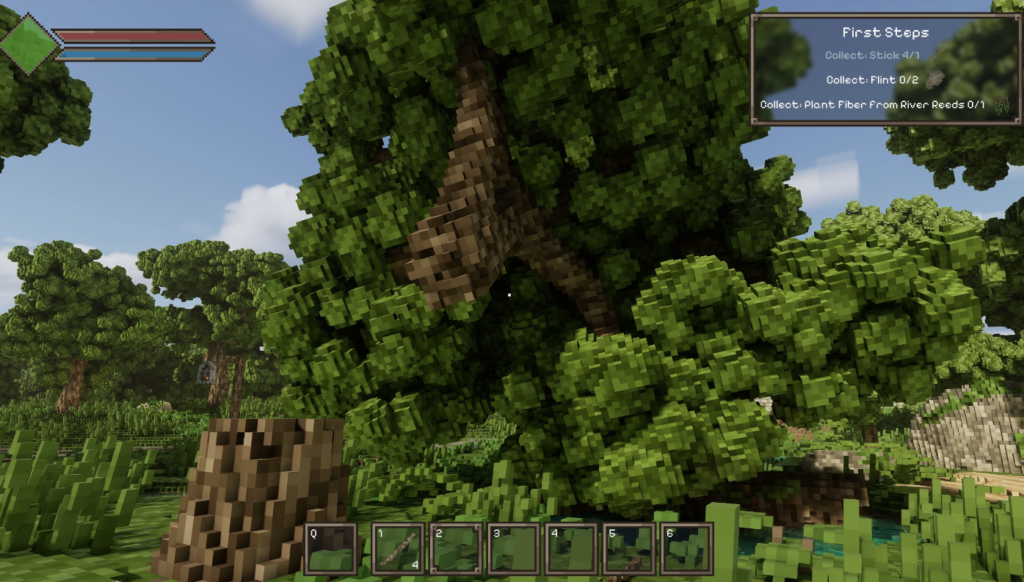
I have to be real about the beginning: the game doesn’t hold your hand well. There is a tutorial, but I felt like I spent way too much time in it without actually learning the important stuff. It drags on a bit, and yet, when I finally got into the world, I still felt lost. I ended up having to figure out most of the complex mechanics—like how the pixel-breaking actually scales or how to properly trigger the gravity physics—by myself through trial and error. It’s a bit of a “sink or swim” start, but once you get over that initial hump and start experimenting, things finally start to click.
Gameplay & The “Pixel” Feel
The first thing that hits you is how granular everything is. You aren’t just hitting a block; you’re destroying it pixel by pixel. At first, I thought, “Man, this is going to take forever,” but there’s something oddly meditative about it. It makes every hole you dig or tunnel you carve feel like you actually carved it rather than just deleted a cube. It gives the world a texture that most voxel games lack.
Physics and Total Destruction
This is where the game really won me over. Most sandbox games let you leave trees floating in mid-air—not here. Gravity is a constant threat (and a tool). I remember finding my first big tower. Instead of running in swords-swinging, I just started dismantling the base pillars. Watching the physics engine kick in as the entire top floor tilted and smashed into the ground was incredible. The coolest part? You can scavenge the entire mess. Every bit of stone and wood that falls can be picked up and repurposed.
Crafting and Survival
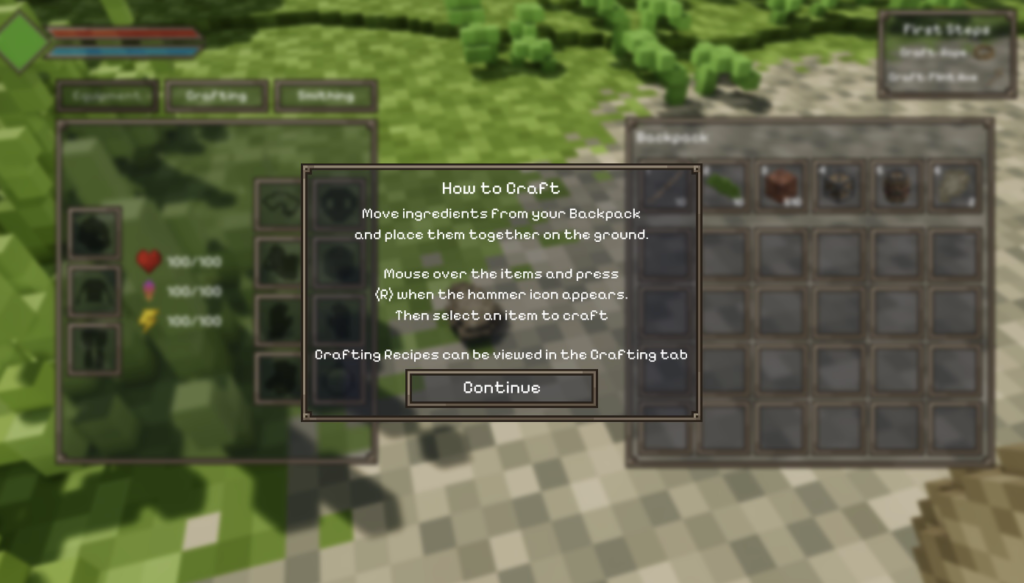
The survival loop is pretty unique because of the floor-based crafting. You don’t just sit in a menu; you literally drop your materials in a pile and see what you can “manifest” from them. It feels very “survivalist”—like you’re actually tinkering with items in the dirt.
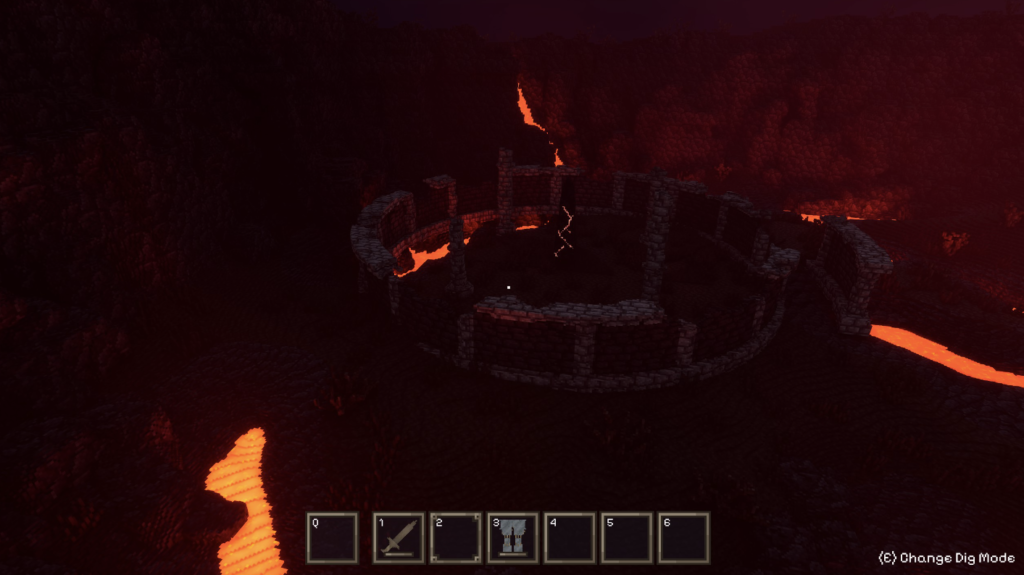
For exploration, I’ve been using the abandoned ruins scattered around as my main hubs. Finding a “Keep Ruin” or a “Fisherman’s Hut” is a lifesaver because you can just slap down a bed and use the existing chests to store your loot. It makes the world feel lived-in, like you’re reclaiming a fallen kingdom.
Magic and Combat
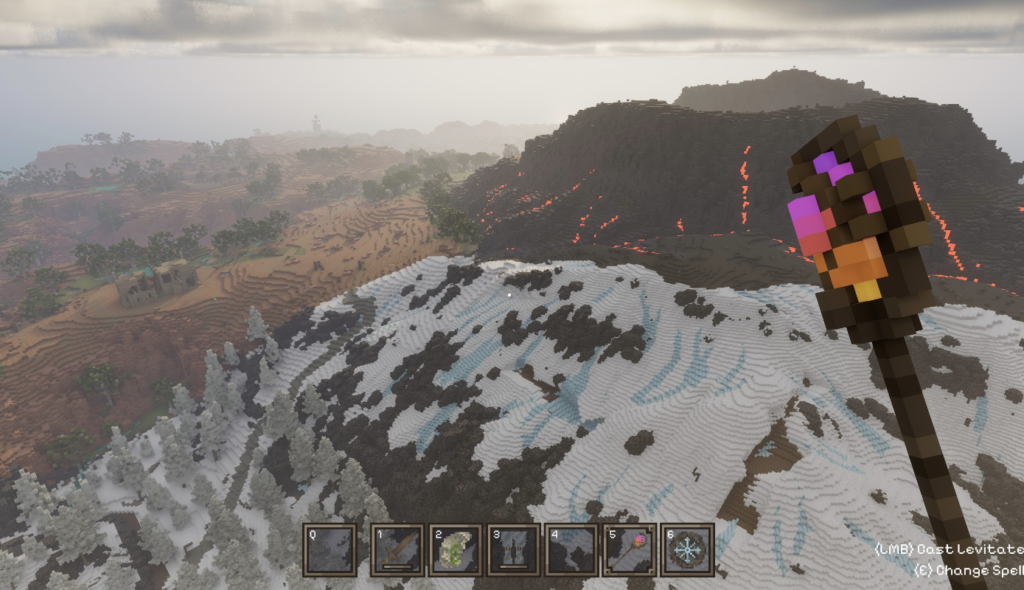
Combat is a bit stiff at first, but it opens up once you find staves and spells. I’ve been playing with the “Frost Ray” and “Frost Ball” lately. The magic isn’t just for killing skeletons, though—you can use spells like “Levitate” to literally rip chunks of the terrain out of the earth and launch them at enemies. I’ve also been experimenting with the new Shurikens, which are way more expensive than arrows because you need a smeltery, but they hit like a truck.
The Zones & Discovery
The world has a few different biomes now, like the Mushroom Swamp and the Snowy Mountains. To be honest, it doesn’t take that long to explore them all once you get moving, but they each have their own vibe and unique caves. It’s funny when lava can hurt and kill you while a falling tree or misplaced territory might as well crush you.
The real challenge comes from the Bosses. Some zones have these massive world bosses, like the Deathcap or the Glacial Colossus, but they don’t just appear—you have to find Sigil pieces hidden in nearby structures to summon them. These fights are actually quite challenging; I learned the hard way that you really need to grind for some high-tier equipment (like Silver or Titanium) before you even think about using those sigils.
Final Thoughts
Look, it’s a 7/10 because it’s still an indie game with some rough edges. The tutorial definitely needs work, and the pixel-by-pixel digging might drive some people crazy. But the physics-based destruction is fun enough. It’s quirky, it’s creative, it almost feels like you are in creative mode, and seeing a solo dev pull off these kinds of mechanics is awesome. Definitely worth checking out if you want a sandbox that actually respects the laws of gravity.
Last but not least, the lack of multiplayer is a bummer for some, and it would really make the game a favour if it was implemented, but it’s still honest work. Maybe in future updates we can see dungeons and a more polished crafting system.
And if you like to build stuff and get creative, Lay of the land really has some interesting potential to make some dreams come true.