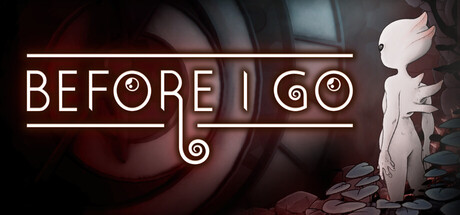
Before I go Review
Finding a Metroidvania that strikes the right balance between good atmosphere and comprehensible challenge is no easy feat, especially when it’s the work of a single developer.
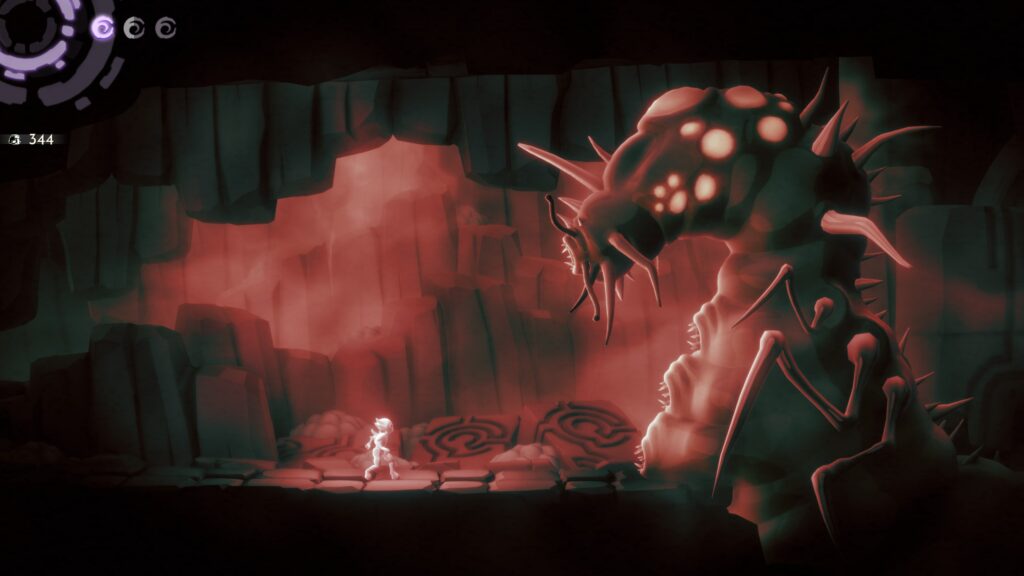
Most of the game occurs in the setting of a huge cave, and it manages to give some “lo-fi” aesthetics with both the music and the lighting effects. The game presents you with the story of old architects and gods and how some kind of plague is taking over the world, and you are just a chosen survivor to disrupt the chaos.
The story itself wasn’t captivating enough for me, and I feel that it was saved (and mostly ignored) by the gameplay and how smooth everything feels. It’s a rare case where the kinesthetics of the game are strong enough to carry the experience on their own.
Gameplay
In a game where 80% is platforming, if the jump feels “floaty”, the game fails. Here, the movement is precise. Whether you are wall-jumping to avoid a projectile or getting into a certain place, the controls respond exactly as they should. Note that I played the entire game with a controller and I strictly recommend doing so.
Also, I couldn’t find a single bug or an instance of bad performance anywhere. The frame rate remained rock solid through the entire playthrough without breaking the immersion.
Difficulty: Fair but firm
For genre veterans I don’t think this will be a hard game at all but it demands respect. It really feels rewarding when you complete a zone because at the end there is usually a checkpoint waiting for you but there were some times where I died exactly right at the last part of a challenge. It’s frustrating, but it makes the eventual success much sweeter.
To counter this, some parts offer you an in-between checkpoint that costs crystals, a limited currency that can be acquired in the game and will really relieve you from stress in parts that can take everything from you. There are also some shrines that allow you to increase your health pool and so on in exchange for crystal temporality (till you die) but I wouldn’t waste such a limited resource on those.
Personally, I’m a hoarder and I have the belief that later in the game I’ll be presented with harder scenarios where spending those crystals will become a must but hey, if someone wants to progress as fast as possible, who am I to judge?
The platforming
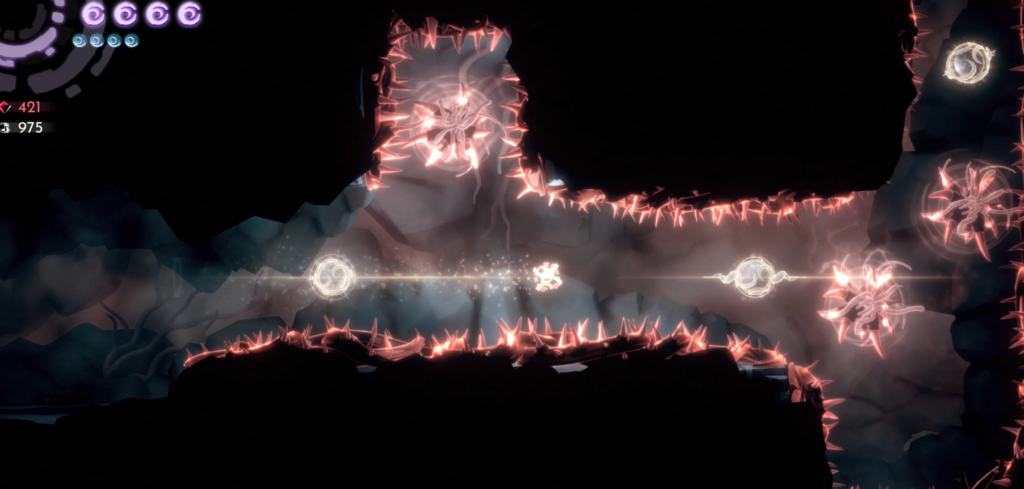
Most of the scenarios present a “two-way” logic. You always start on side A, a linear but challenging path to progress and once you reach the end, you almost always unlock side B – a shortcut that loops back to a previous area or checkpoint while connecting to other places.
Future backtracking becomes slightly easier and interconnects the world.
I’ve seen complaints about the difficulty of the bosses being too hard, even for the first one. However, it didn’t take me more than 2 or 3 tries to take care of it.
They are challenging enough to keep you on your toes, requiring constant movement and dashing, but they are never ‘unfair”. Everytime I took damage I could only recognize it was a skill issue on my side due to a mistimed jump or a greedy attack – rather than poor game design. The movement of the entire world (the main character, the bosses, the environment) feels completely fluid and this is part of what makes me not give up.
The other part that adds a bit of challenge to the game is the monsters, there is a great variety of them and each one has a different mechanic that can be taken advantage of, while others are just better to avoid.
However, they are the main resource to get minerals that allows us to improve the characters strength in certain shrines
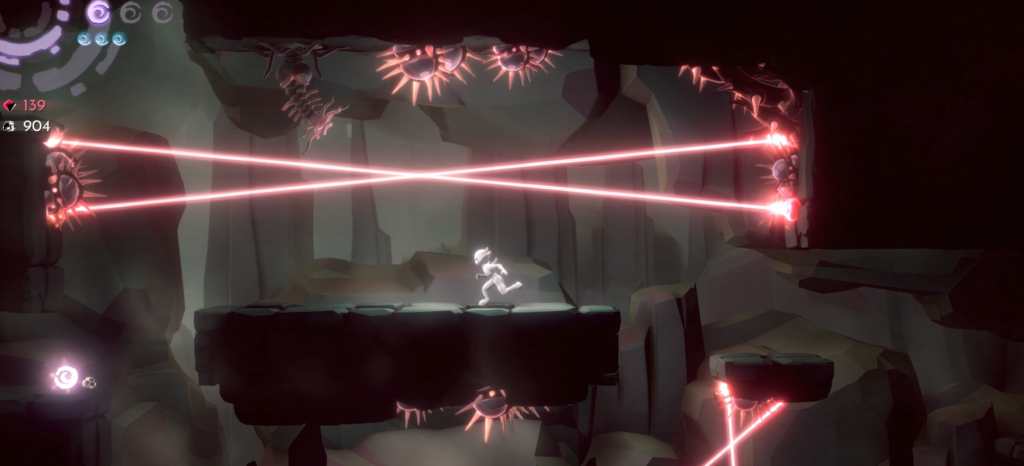
Can I get stronger? Or is it just lineal progression?
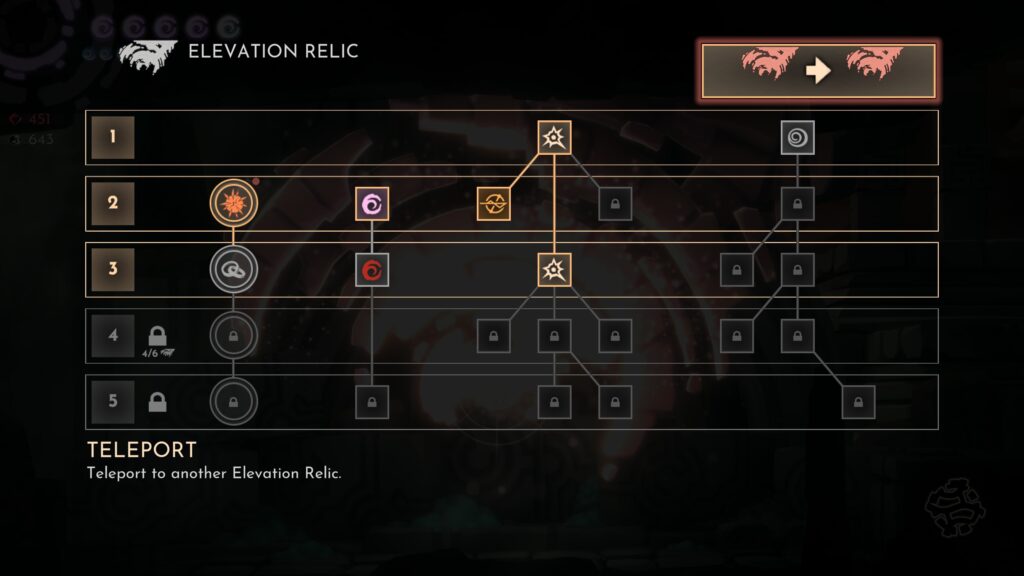
One of the main mechanics of the games is the shrines. They act as checkpoint points, as teleporters (some) and as upgrade shrines.
The available upgrades are just basically improvements of the available systems, like, being able to do more damage, having more area to cover, more hp pool… And there is one interesting piece of equipment, like a ring, that allows you to equip multiple “talents” into it as you find them in your adventure
However, not everything is up to grind. In order to unlock most upgrades you need to unlock shrines first, as the amount you unlock serves as a requirement too.
The nature of Metroidvanias
To get lost, I was having a lot of fun being able to progress while a decent numbers of alternate paths started accumulating behind me, and there was a point where I literally got so lost I had to start backtracking and making notes
since the early levels. Managed to get a hold on some powerups and improvements for the character, as well as some collectibles.
And when I felt that I had retaken my lost path and was able to continue the story, I realized it was another dead end.
So I ended up mapping entire zones to make sure where I could and couldn’t go while making notes about what I needed to progress through them, which was only my fault to begin with, for trusting my guts too soon. All I want is to be able to say “UNO!” and discover that I am finally on the right track.
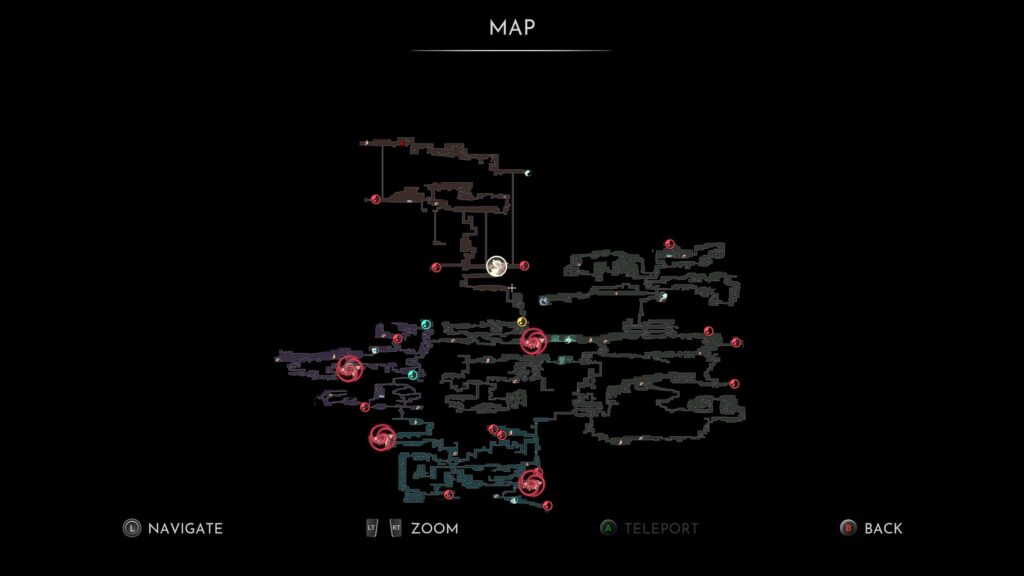
Map and markers
One of the most important aspects of the game is the markers. And I’m not talking about dead space markers but more like pinpoints in the map so you can recognize where to maybe go, where you can’t go yet, where you have died..
The only downside is that there are LIMITED markers and I ran out of them a few times exploring zones. It forces you to prioritize (you can’t just mark every single unexplored corner), so it kinda acts like a layer of “inventory management” to the act of navigation
Collectibles
No Metroidvania is complete without secrets, and Before I Go features 50 of them well scattered throughout its world. So far I’ve managed to hunt down about 20 of them.
Most of them are “hidden in plain sight”, you can see them shimmering on a high edge or behind a gate, so until you unlock certain abilities there is nothing to do.
Others require a more classic approach: huge every suspicious corner to find secret walls to walk through.
Achievements
The journey doesn’t end with the credits. Before I Go features 28 achievements and while 90% of them are tied to natural story progression, the remaining few are where the real challenge lies.
Beyond the standard 100% completion (which requires getting every single upgrade and collectibles) the developer has included one for completing the game in under 4 hours. By the time you attempt this, you’ll likely have the map burned into your brain (or in a secondary monitor).
However, before attempting some speedrunning, there is also another achievement related to a “no crystal” run. Since crystals are the primary resource for both safety (checkpoints) and character growth, completing the game without being able to spend a single crystal is essentially a “level 1 run”. All of this put together ensures around 10 to 20 hours of gameplay for the most avid players.
Full game walkthrough with no commentary
Verdict
Before I Go stands out as a testament to what a solo developer can achieve with a clear vision. If you are looking for a metroidvania that prioritizes “vibe” and tight gameplay over endless hand-holding, this game is 100% recommended.
Buy the game on steam.